
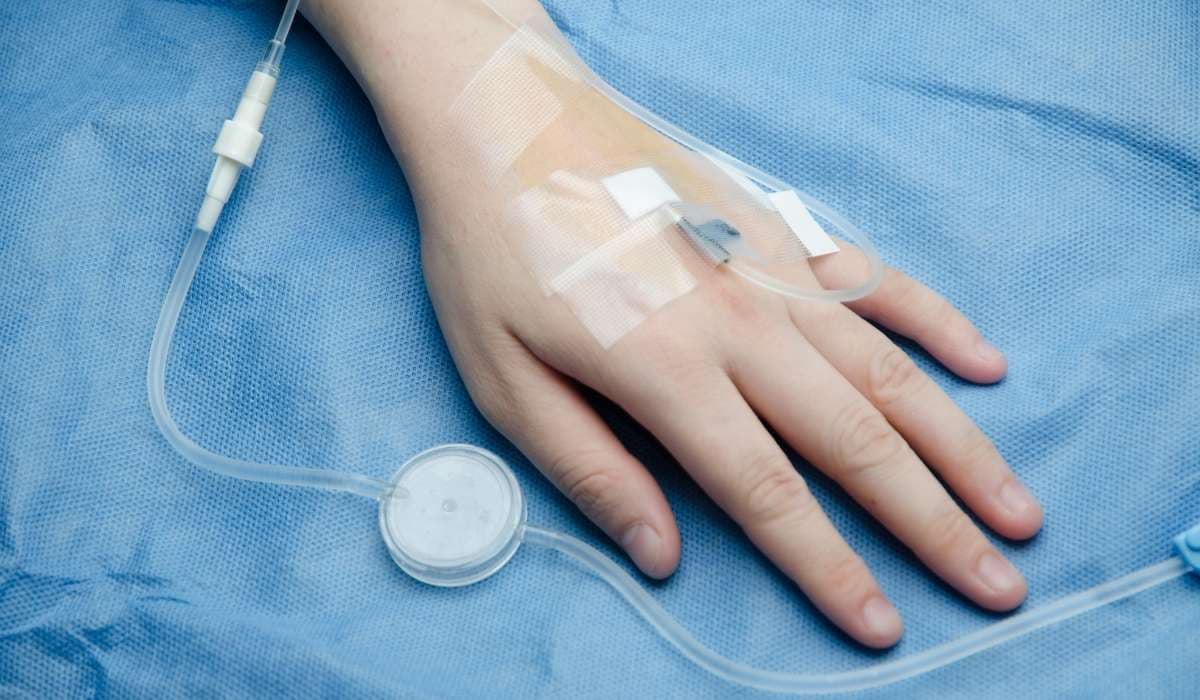
Most patients starting intravenous immunoglobulin (IVIG) want one number first: how long will this take? The Immune Deficiency Foundation states that IVIG infusions "typically take between 2-6 hours," and a first IVIG infusion usually sits at the long end of that range. The reason is not scheduling or staffing. It is written into the FDA-approved label of every IVIG product.
This article explains what sets the clock on an IVIG infusion, why a first visit runs longer than later ones, and what a patient can usefully do beforehand. For the clinical background on the therapy itself, see IVIG at Prime Infusions.
How long does an IVIG infusion take?
The Immune Deficiency Foundation puts the usual range for an IVIG infusion at 2 to 6 hours, compared with 1 to 2 hours for conventional subcutaneous immunoglobulin. Three things decide where a given patient falls inside that range: the volume of fluid, since IVIG is dosed by body weight in milligrams per kilogram; the maximum infusion rate the product label permits for that specific indication, which differs from product to product; and the titration schedule, because IVIG is never started at its maximum rate.
A first appointment at Prime Infusions also includes intake, baseline vital signs, intravenous access and a documented weight: the Centers for Medicare & Medicaid Services requires an accurate weight in kilograms before each infusion, because the IVIG dose is calculated in mg/kg. Later infusions, run at a rate the patient has already tolerated, are shorter and more predictable than the first.
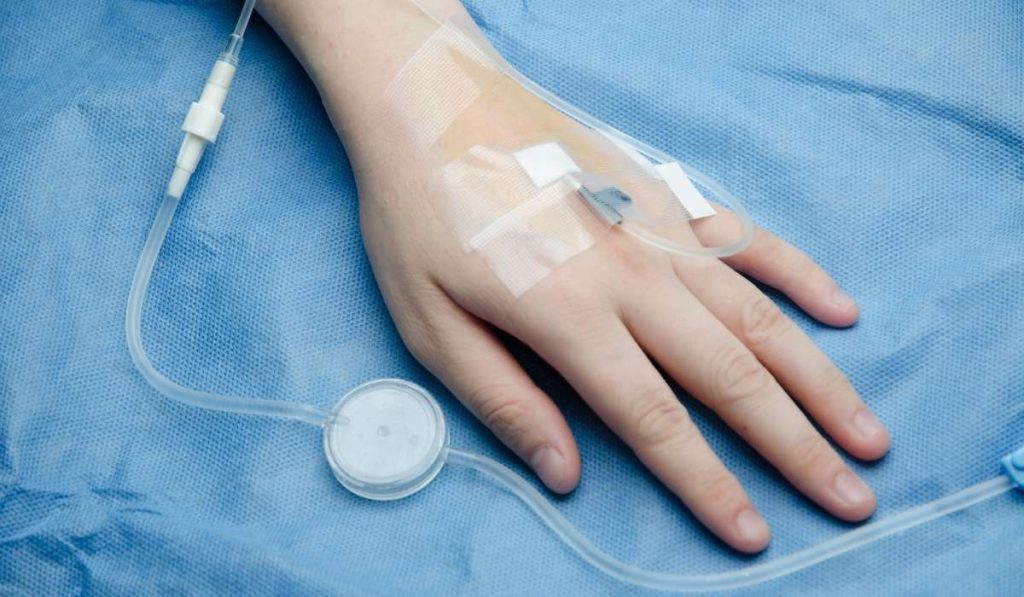
Why does a first IVIG infusion take longer than later ones?
Every IVIG label prescribes stepwise rate escalation: the infusion begins at a low rate and is increased only if the patient tolerates each step. The Immune Deficiency Foundation states the principle directly, advising that a first-time administration rate should be slower than recommended and then increased to a rate that is tolerable. A first IVIG infusion therefore spends real time at the bottom of the labeled range, with observation between steps, before reaching the speed later infusions can start closer to.
Guo and colleagues, writing in Frontiers in Immunology (2018;9:1299), report that slowing down the rate of infusion can greatly reduce the rate of adverse reactions. Labeled ceilings vary by indication and by risk group, not only by product, as the table below shows.
| Product and indication | Labeled starting rate | Labeled maximum rate |
|---|---|---|
| Gamunex-C, primary immunodeficiency (IV) | 1 mg/kg/min | 8 mg/kg/min |
| Gamunex-C, chronic inflammatory demyelinating polyneuropathy (CIDP) | 2 mg/kg/min | 8 mg/kg/min |
| Privigen, chronic immune thrombocytopenia (ITP) | 0.5 mg/kg/min | 4 mg/kg/min |
| Octagam 10%, dermatomyositis in adults | 1.0 mg/kg/min | 4.0 mg/kg/min (0.04 mL/kg/min) |
Those figures come from the Gamunex-C prescribing information, the Privigen prescribing information and the Octagam 10% prescribing information. The Octagam 10% cap is explicit about why it exists: patients with dermatomyositis are at increased risk for thromboembolic events, and the label instructs clinicians not to exceed 0.04 mL/kg/min.
How do labeled infusion rates translate into hours in the chair?
The arithmetic below is an illustration built from labeled rates, not a label statement and not a promise about any individual appointment. Consider a 70 kg patient receiving 500 mg/kg of a 10% immunoglobulin product. That is 35 grams of immunoglobulin, which in a 10% solution is 350 mL of fluid. At the Gamunex-C labeled maximum of 8 mg/kg/min, the pump would move roughly 336 mL per hour, so the volume alone would run about one hour. Held at the labeled starting rate of 1 mg/kg/min, the same 350 mL would take more than eight hours.
Real chair time falls between those two figures, and a first IVIG infusion sits nearer the slow end. The actual duration depends on the product, the dose in mg/kg, the labeled ceiling for the indication being treated, and how the patient tolerates each step.
Is an IVIG course one visit or several days in a row?
For higher-dose immunomodulatory treatment, an IVIG course is deliberately split across consecutive days, and patients should plan work and childcare around that rather than around a single appointment. For chronic immune thrombocytopenia, the Gamunex-C label specifies a total dose of 2 g/kg divided into two doses of 1 g/kg, and the Octagam 10% label specifies 2 g/kg divided in equal doses given on 2 consecutive days. For CIDP loading, both the Privigen label and the Gammagard Liquid prescribing information specify 2 g/kg over 2 to 5 days. Octagam 10% for dermatomyositis in adults is labeled as 2 g/kg divided over 2 to 5 consecutive days every 4 weeks.
Replacement dosing for immunoglobulin deficiency is different: Gamunex-C is labeled at 300 mg/kg to 600 mg/kg every 3 to 4 weeks, normally a single visit per cycle. Our article on IVIG for CIDP covers the loading-and-maintenance pattern in more detail.
How much water should you drink before an IVIG infusion?
Hydration before IVIG is a labeled safety instruction, not a comfort tip. Every IVIG product carries an FDA boxed warning headed "WARNING: THROMBOSIS, RENAL DYSFUNCTION, and ACUTE RENAL FAILURE," and inside that box the label instructs clinicians to ensure adequate hydration in patients before administration. The same boxed warning states that thrombosis may occur in the absence of known risk factors, and names volume depletion among the conditions predisposing patients to renal dysfunction.
The Immune Deficiency Foundation's patient-facing guidance is to drink plenty of water the day before, the day of, and the day after an infusion. That is a three-day habit, not a glass of water in the waiting room. Patients with heart failure, kidney disease or a fluid restriction should ask their prescriber what target is right for them, because drinking more is not safe for everyone.
What premedication is used before an IVIG infusion?
Premedication before IVIG is a prescriber's decision, made for an individual patient and written as an order. The Immune Deficiency Foundation states that for IVIG, clinicians may consider acetaminophen, diphenhydramine, non-steroidal anti-inflammatory drugs or corticosteroids. The same source notes that premedication is usually not needed for subcutaneous immunoglobulin, one of the practical differences covered in our comparison of IVIG and subcutaneous immunoglobulin.
Nothing here is an instruction to take anything. Do not take an over-the-counter analgesic or antihistamine before an IVIG appointment on your own initiative; tell the prescribing clinician what you already take and let the order be written. Rate control is the other lever, and Guo and colleagues report that slowing the infusion rate can greatly reduce the rate of adverse reactions. At a Prime Infusions center, the nursing team can slow or pause an IVIG infusion under the prescriber's orders.
How common is a headache after an IVIG infusion?
Headache is the most frequently reported IVIG side effect, and the rate is clearly dose-dependent within the label of a single product. The Gamunex-C prescribing information reports headache in 14.9% of the intravenous primary immunodeficiency population, 31.0% of the CIDP population and 52.1% of the chronic immune thrombocytopenia population. Those are the same drug at different doses: replacement dosing at the low end, 2 g/kg immunomodulatory dosing at the high end. A patient receiving a loading course should expect a higher headache rate than a patient on monthly replacement therapy.
At the population level, the Immune Deficiency Foundation states that systemic side effects occur in up to 34% of IVIG infusions and that only about 1% of IVIG infusions result in serious systemic side effects, listing headache, nausea, fever or chills, flushing, wheezing, body aches and chest tightness as the most common. Aseptic meningitis, hemolysis and transfusion-related acute lung injury appear in Warnings and Precautions on IVIG labels, not in the boxed warning, which covers thrombosis and renal dysfunction or acute renal failure.
What should you bring to a first IVIG infusion, and how should you plan the day?
Bring what the IVIG order and its safety instructions depend on: a current list of every medication and supplement you take, a recent weight, and the name of the product prescribed if you know it, because labeled rates and rate caps differ by product and indication.
- Start the water the day before, per Immune Deficiency Foundation guidance, and keep drinking on the day of and the day after.
- Block the whole day for a first IVIG infusion, and confirm whether your course runs across consecutive days.
- Ask the prescriber whether you should arrange a ride home, particularly if premedication has been ordered.
- Ask which IVIG product was prescribed and what the labeled maximum rate is for your indication.
- Report headache, chills, flushing, back pain or chest tightness to the nurse while it is happening, not afterward.
How do you start IVIG at Prime Infusions?
Prime Infusions administers IVIG at 13 infusion centers across New York, including our Manhattan infusion center on the Upper East Side, our Great Neck infusion center in Nassau County and our Port Jefferson infusion center in Suffolk County. Patients can begin with the IVIG request form, and referring clinicians can send orders through our referrals page or call 718-443-4000. Coverage and prior authorization are determined by your health plan; our team verifies benefits and submits the authorization request. Details of the therapy itself are on our IVIG treatment page.
This article is for general education and is not medical advice, a diagnosis, or a treatment recommendation. IVIG products carry an FDA boxed warning for thrombosis and for renal dysfunction and acute renal failure; review the full prescribing information for the product prescribed to you and discuss your individual risk factors with your treating clinician. Coverage and out-of-pocket cost are determined by your health plan.